
Digitalisation and sustainability – where the Twin Transformation is already successful
Munich, 17 November 2023
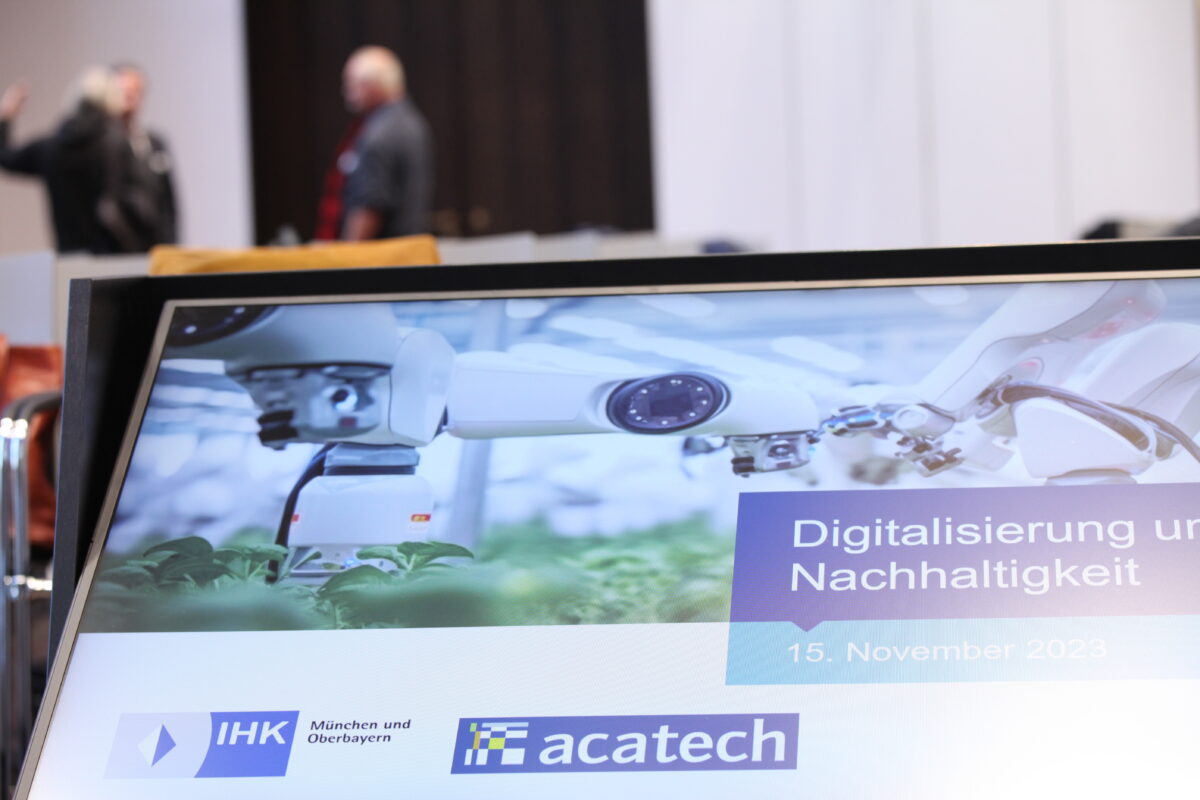
Can digitalisation serve as a catalyst to increase sustainability within a company? Or is it a problem in itself due to the high amount of energy that digitalisation requires? How the Twin Transformation – in other words, digitalisation and sustainability hand-in-hand – can be a success and what companies have already achieved in this respect: this was shown by the Chamber of Commerce and Industry (CCI) for Munich and Upper Bavaria, together with acatech, as part of the event “Digitalisierung und Nachhaltigkeit” (Digitalisation and Sustainability). In conclusion: the range of potential is varied – and the examples are inspiring. However, more networking and collaboration is required.
Armin Barbalata, CDO and member of the Executive Board (CCI for Munich and Upper Bavaria), and Anna Frey, Head of the topic network Technological Sovereignty and Industrial Value Creation at acatech, greeted the participants, giving a view on the significance of the Twin Transformation for the economy.


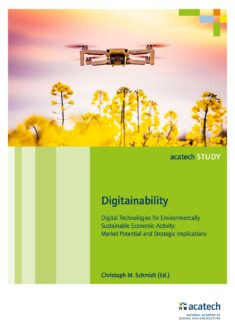
At the end, Thomas Steiner, Scientific Advisor at acatech, provided the participants with a view on the role of digitainability within the current economic environment. His basis: the acatech Digitainability study on the ecological economy. Currently, 50% of German companies use digital tools for an ecologically sustainable value creation. By 2030, this can even increase to 75%.
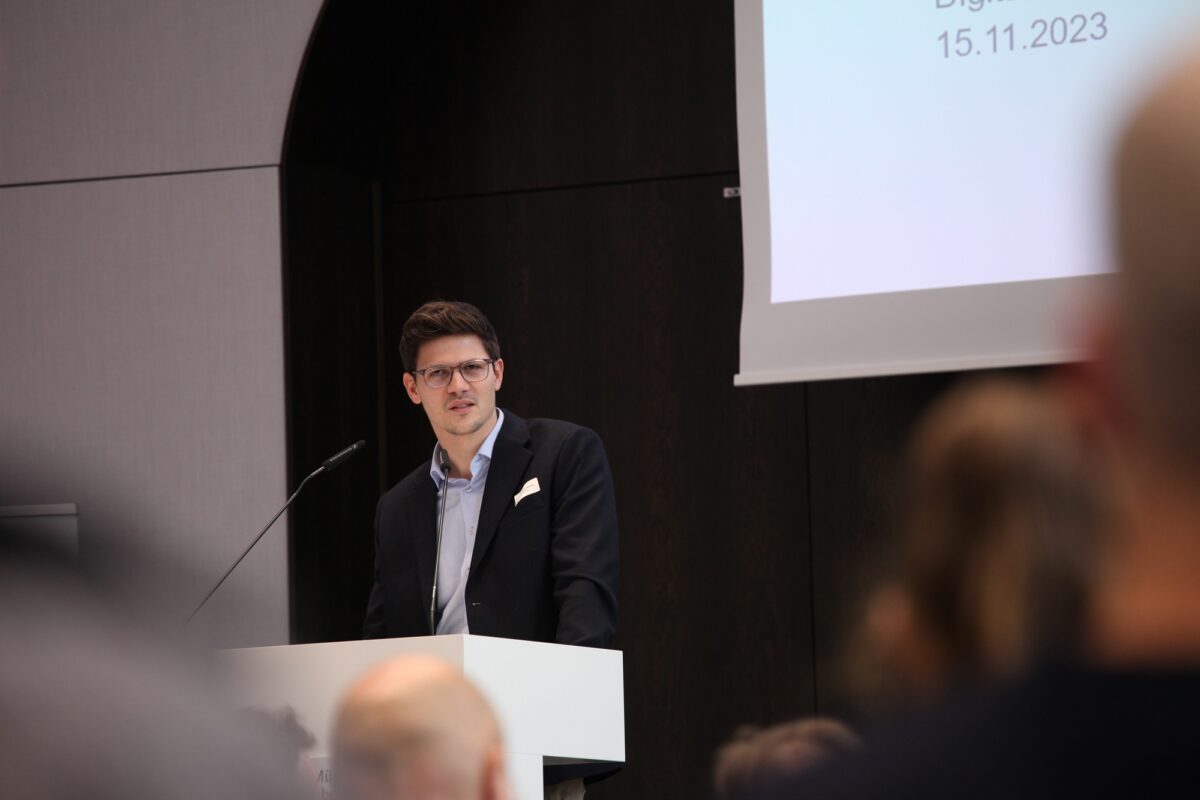
When companies take measures for more efficiency, the positive effects of this, however, are still frequently felt as side effects. The summary from Thomas Steiner: digitainability reinforces the creation of value, but it must be implemented strategically. When it comes to efficiency, special rebound effects should be avoided. Companies must more actively integrate effectiveness into the entire value-added chain. And: more leeway and incentives are needed so that companies utilise digitainability solutions.
Go to the acatech Digitainability study
Download the slide deck on the study as a PDF (in German)
Climate neutrality – the role of manufacturing
Maximilian Bock, Projektmanager Technologie (ZD.B Themenplattform Digital Production and Engineering, Bayern Innovativ), had key details from the study “Vision: 2045 – towards climate-neutral production with digitization” at hand. The potential provided by digital applications is huge. In order to tap into them, energy producers, power grid operators and manufacturing-based companies have to be more closely networked, allowing climate-neutral developments to gain momentum.


Rainer Karcher, Head of Sustainability (Allianz Technology), showed in his keynote how IT and digitalisation can become more sustainable and, in turn, contribute in themselves to sustainable results. His closing message on the key function of digitalisation: “We have to act. We have to create change. Data is the basis for everything,” said Rainer Karcher.
Examples from companies show a huge spectrum
The following examples from businesses allowed the participants to clearly see which measures companies from various industries have already leveraged successfully and which insights can be gained for one’s own company.
- Daniel Scholz (Footprint Intelligence) showed how digitalisation leads to transparent, data-based decisions and how through this, measures for decarbonisation can be chosen and prioritised in a more targeted manner.
- Manuela Seeholzer (VR-Bank Starnberg-Herrsching-Landsberg) put a focus on the potential of employee mobility. The company-based SAMi park-and-ride portal is a simple yet functional solution for sharing mobility among employees living in the suburbs.
- Hubert Jäger (real-cis) expounded on the potential for sustainability in the resource-intensive area of cloud computing and datacentres, and on how opportunities can arise from this for viable forms of heating, a symbiosis with photovoltaics, and more data sovereignty.


- Yannick Möhring (Green IT Solutions) introduced the concept of IT remarketing. It keeps hardware running for longer thanks to secure data processing, thus saving emissions and protecting company data.
- Alexander Steiss (Docunout) focused on the consumption of paper. Digital document management is not only resource-friendly, it also supports the flow of information within the company and takes the upcoming e-invoice regulation into consideration.
- Andreas Gallasch (Software Factory) used a water meter to show how products can be included in a circular economy and how this allows companies to achieve more independence within the supply chain.
- Dennis Huschenhöfer shared his details on the concept of Mittelstand-Digital Zentrum Klima.Neutral.Digital. Thanks to own climate coaches acting as transformation helpers and AI trainers, SMEs receive tailored support on their way towards climate neutrality by 2035.


-
Contact
Dr. Anna Frey
acatech - Deutsche Akademie der Technikwissenschaften
Leiterin Themenschwerpunkt Technologische Souveränität und industrielle Wertschöpfung
Tel.: +49 89 520309-58
frey@acatech.deDr. Thomas Steiner
acatech - Deutsche Akademie der Technikwissenschaften
Wissenschaftlicher Referent
Tel.: +49 89 520309-923
steiner@acatech.dePress contact

Clemens Wolf
acatech - Deutsche Akademie der Technikwissenschaften
Pressesprecher, Referent Strategische Kommunikation
c.wolf@acatech.de -
Publication
Topic